Wednesday, February 13, 2013

The Social Network


For our class we viewed the movie The Social Network starring Jesse Eisenberg, Justin Timberlake and Andrew Garfield. I actually had never seen it before and all I knew about the movie is that there were two twin rowers and that a meme sprouted from one of the scenes.

One thing that I thought was interesting was the contrast and comparison that can be made between the portrayal of Facebook’s founder, Mark Zuckerberg and the actions of the late Steve Jobs. Now, we did not actually read a biography all about Zuckerberg but we did read and watch some interviews with him. I personally really liked Zuckerberg (and approved of his music taste) even though we didn’t get to learn too much about him. But since we just finished reading the Steve Jobs biography, the portrayal and some “real life Zuckerberg” things seemed similar to actions of Steve Jobs.

Now there are the obvious differences. Zuckerberg went to Harvard and invented Facebook as a college student and Steve Jobs didn’t actually end up finishing college. But, both men are brilliant and are/were heads of giant companies along with a few other similar factors. For example, the way both of them dress is very similar. While many company creators or owners may dress sharp or fancy when going to meetings or interview, both Mark and Steve always seem(ed) to keep it casual. Jobs had his uniform of a black turtleneck, jeans and sneakers. Zuckerberg also keeps it casual in interviews and in the movie where he often wears a sweatshirt or sandals. I think the way both of these men dress would be a good example of the Google rule “You can be serious without a suit”. The way that Zuckerberg handled and interacted with people in the movie seemed very similar to Jobs. He often would tell people exactly what he thought even though it could come off as rude or hurtful. An example of this instance from the movie would be when Mark is talking to his ex-girlfriend in the beginning of the movie. Jobs was also very hard on people especially during interviews by asking questions that seemed “awkward” or not relevant. That social awkwardness crossed with a great knowledge seems to come at both a blessing and a curse for both Zuckerberg and Jobs.  

I think that the Social Network movie was very interesting even though they put a Hollywood take on the creation of Facebook. With that said, I think I will be looking forward to the movie that will be created about Steve Jobs in the future. 

Blog

Sunday, February 3, 2013

Is Vine the Next "Cool" App?


In This Week in Google, the group started their podcast by talking about different social media updates and news. At one point, Leo Laporte briefly mentioned that Twitter put out a new app called Vine. However, he did not further discuss it and the group went back to discussing Google Plus. And even though I am not the biggest Twitter fan I decided to look into this new “upcoming” app to see what it was all about.

The description on the iTunes app store describes the app… “Vine is the best way to see and share life in motion. Create short, beautiful, looping videos in a simple and fun way for your friends and family to see.” With this free app, Vine users can upload unlimited videos, instantly share them on Twitter OR Facebook, use hashtags just like Twitter and even find and follow other users.

(View an example of Vine being used here: http://vine.co/v/bOIqn6rLeID)

Vine is becoming so popular because it allows users to easily share more parts of their lives with their friends and family over Twitter. People who love using Twitter are all about sharing personal stories or photographs with their followers so adding Vine to their phones would be an added bonus. Vine also makes watching other people (including celebrities who use Vine) a lot more interesting because you can see six second snapshots of their lives.

According to an article on Tech Crunch, in it's first week, Vine was able to swing onto the top 10 free apps in the Apple app store. Vine has already beat out the other Twitter video uploading app competitors (http://keyhole.co/realtime/lg5sbR/TwitterVideo). However, many worry that many people will use Vine to upload porn. In it's short existence, Twitter has already had to deal with and respond to multiple NSFW tags and problems on Vine. 

Will Vine become the Instagram of videos? Or will it become another Chatroulette? Only time will tell at this point. 

If you are interested in Vine, check out this "CNET How to: Get Started with Vine" video...

Wednesday, January 30, 2013

Casual Sundays?


When I was younger, I used to go to church. Every Sunday morning my family would get cleaned up, my mother would force me to wear something nice and then we would all pile in the car and head over. Every week I would drag my feet and fight with my parents about how much I hated going to church. The only thing I liked was that sometimes I would get to hang with the other kids before communion, and that there was food that everyone got to enjoy at the end. I absolutely hated getting all fancied up to go and sit and listen to boring sermons. I was a tomboy when I was younger and dreaded having to wear a skirt or, god forbid, a dress. It would be so much of a hassle every Sunday that eventually, we started to go less and less until we didn’t have to go anymore (and I’m not complaining).

Now, after reading through Google’s “Ten Things We Know to Be True” comments I’ve thought about what “point” some religious could take from Google to make their religion, in my opinion, “better,” or more appealing to a greater number of people. From my own personal experience, I think if religions decided to take Google’s ninth point, “You can be serious without a suit," into account, more people could share a positive religious experience.
"Our founders built Google around the idea that work should be challenging, and the challenge should be fun. We believe the great, creative things are more likely to happen with the right company culture-and that doesn't just mean lava lamps and rubber balls. There is an emphasis on team achievements and pride in individual accomplishments that contribute to our overall success. We put great stock in our employees-energetic, passionate people from diverse backgrounds with creative approaches to work, play and life. Our atmosphere may be casual, but as new ideas emerge in a cafe line, at a team meeting or at the gym, they are traded, tested and put into practice with dizzying speed-and they may be the launch pad for a new project destined for worldwide use."

It would definitely be more attractive to the younger generation. I was scared away from church at a young age due to all of my memories of stuffy old people surrounding me while I wiggled uncomfortably in my itchy “Sunday best”. 

If religions took the “You can be serious without a suit” route, they would be far more appealing to the younger generation. Many children dislike dressing up and wearing uncomfortable clothing. When I went to church I could not concentrate on the message that was being delivered by the preacher because all I could think about was the fact that my skirt or dress was itchy. It bothered me so much that I still equate church with being uncomfortable, boring and a waste of time. Our generation (along with younger generations) has been raised completely differently from our parents and  grandparents. We are used to dressing casually and comfortably. If churches and other places of worship began to cater towards what we are used to and what we like as a generation, they probably would get more support and more people would have a positive religious experience. I know if I wasn’t forced to wear my “Sunday best” as a child I probably wouldn’t dislike church as much as I do now. I could have actually focused on the messages that were taught and learned to enjoy church rather than see it as a horrible waste of time. 

Friday, January 25, 2013

The Personalization of the iPad/iPhone


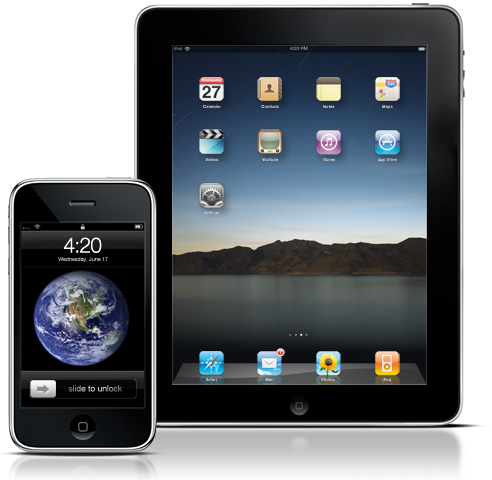
Today in class we got to play with a bunch of iPads. Now, I have never owned an iPad or really used one but my mother got one when I left for college. I do have an iPhone so I have used an Apple touch screen product. The only thing I have done on an iPad before our class was taking a picture with my moms’ over break. Other than that, I did not know anyone who owned one and therefore never got around to appreciating the iPad for what it does. The iPad takes the “personal computer” to a whole new level.

This got me thinking about how well Apple makes their products, giving the consumer the ability to “personalize” their iPad or iPhone. As an iPhone owner I have definitely realized how personalized my iPhone is to me. I have lost my phone and another Lawrence student was able to tell by looking at my background image and music that the phone belonged to me.

The iPhone and the iPad have a simple yet elegant design that makes them very easy to personalize. Externally, Apple (along with many other companies) manufacture many colorful, complex, or cool case and cover designs so that you can personalize and keep your iPhone/iPad safe. Then there is the home screen and background, both of which you can set to any picture or texture of your choice (both my pictures are of Green Day). On the iPhone, you can change the text and ringtone noise. For both the iPhone and the iPad you can download thousands of different apps to your phone. I have a Sudoku app, Instagram app, and a Green Day app on my phone. I would have more but I decided I want more room for photos and music rather than have a bunch of apps. Music is another way one can customize their iPad or iPhone. The type of music on their Apple product can show what kind of person you are. These are just the main customization options for the iPad or iPhone, there a multiple other options a consumer has to make their Apple product “personal” and theirs.

While some people may complain that Apple consumers are just conforming to what is “cool” and that people who buy apple products are just like one another. While they may have initially purchased the same product, they become completely different to the person who owns it. Just by looking at someone’s iPad or iPhone you can tell what kind of person they are. 

Wednesday, January 23, 2013

Steve Jobs and the iPad

The iPad, an Apple blunder or a technological break through?  When the iPad first came out I definitely was skeptical. Being in high school, my friends and I would make jokes like, ‘oh, what’s next? An iTampon?’ To the majority of us, it looked just like a larger iPhone without the calling capabilities. I never really saw the appeal, just buy an iPod Touch or an iPhone instead of spending all that extra money. Yet, after reading the iPad section in the Steve Jobs Biography, I have had a change of heart.

I did not have a TV while growing up so I never actually had seen any commercials for the iPad. After reading the advertisement section and the struggle that Jobs had with being satisfied with a commercial I decided to check out the two commercials he liked best. After viewing them, I can see why people would want an iPad. There are so many things that you can do on it, it is just amazing. In the past, I was stuck on the fact that it looked like a big iPhone minus the calling capabilities and a larger screen when I didn’t think about what else the iPad could provide. It’s much easier to take notes on an iPad during class, and to tote around. You wouldn’t need to worry about bringing your laptop places and having it get damaged by accident. Not to mention the countless amount of apps that can be downloaded and used are also quite impressive.  

The design of the iPad played a major role in the products success. Like most Apple products, it is efficient and simple but appealing to the eye. Even the packaging is beautifully planned and makes an impact on the customer. Simple changes, like the curvature of the back of the iPad, make the product seem more friendly and casual.
“The bottom edge needed to be slightly rounded, so that you’d feel comfortable just scooping it up rather than lifting it carefully” (Isaacson 640).
Also, the lack of a stylus (while it may be in convenient for some people who want exact detail) and the addition of a full touch screen makes the iPad easy to use. It also keeps the iPad "simpler" by not having an extra accessory to worry about.
 
The iPad is also quite zen because it really does adhere to a beginners mind. The story about the illiterate child being able to use the iPad is a great example of how revolutionary this product really is. My mom has an iPad and is able to use it with great ease when I would normally have to walk her step by step through almost every little thing on a normal technological device. Even my younger sister (who can’t even remember how to make a simple power point presentation after being taught how to multiple times) can sit down and use it without asking any questions.

At second glance, I think that the iPad is revolutionary. The iPad is convenient, simple, user friendly and overall a very successful product. 

Tuesday, January 22, 2013

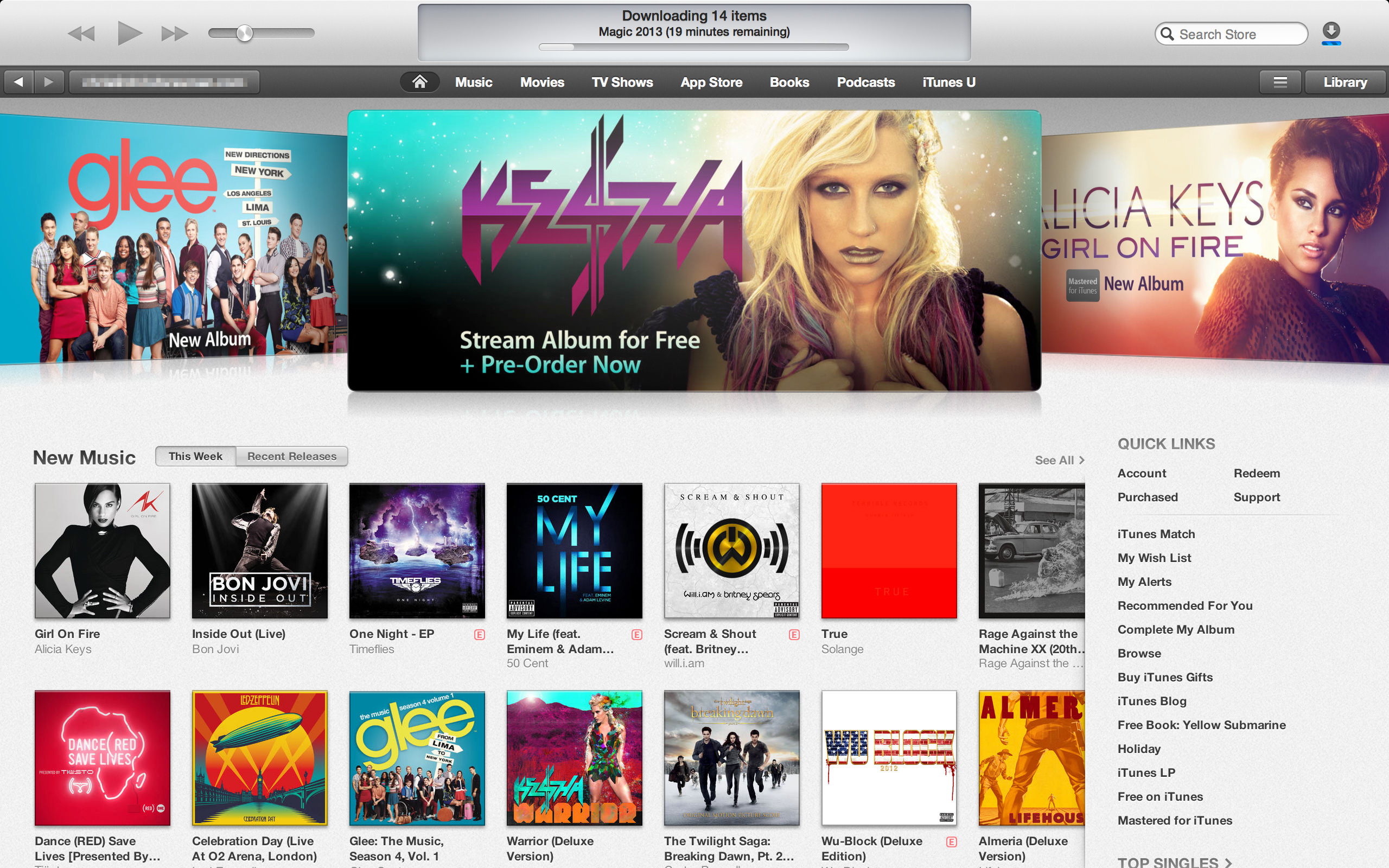
iTunes: the Beginning


iTunes began as a re-modeled version of a program called SoundJam back in 2000. It was first created as a simple music player for the Mac operating system that featured music playback, CD burning and little else. Version 2 was where things started to get interesting - iTunes 2 was developed to accompany apple's latest release, the iPod. People fell in love with the device's simple elegant design but apple computers were not as common back then and its compatibility with iTunes remained worthless to most technology users. iTunes continued to improve user customization by introducing new playlist and rating systems in version 3, but the big decision remained to be made.
iTunes 4 featured two of the most important changes that Apple would make to the program: the iTunes store, and Windows compatibility. The iTunes store was revolutionary; no longer just a music player, iTunes gave music lovers a simple method of downloading their favorite songs through a completely legal method. CDs had been the go-to medium of music sales for so long that as the internet became more and more of a regular part of people's lives, illegal music downloading was not just the preferred option for downloading music but often the only one. Being released around the time anti-piracy campaigns by the music industry were becoming numerous and aggressive, the iTunes store was a huge hit with those wanting to download music on the right side of the law. Great idea sure, but it would have all been meaningless unless the 4.1 update to support Windows took place shortly after. Windows accounted for such a majority of the personal computer market at this point in time that Apple knew they would have to suck it up and provide compatibility in order to reach Windows users everywhere.
In 2003 iTunes was starting to look pretty successful, it worked on both Apple and Windows operating systems, featured a revolutionary user friendly store, and synchronized with the fastest growing mp3 player on the market. The iPod continued on to unprecedented success, leading to spinoffs of every make, size and color imaginable. Apple's foothold in the music community allowed them the credibility to improve marketing on their line of desktops and laptops, finally making them a serious competitor of Windows in the personal computing world.
iTunes and iPods started out as a struggling underdog in the computer market and look where they are today, a company worth billions and known around the world. How did they do it? Apple addressed the single biggest demand of users everywhere, and they did it well. Users want to be able to customize their devices; they don't understand how everything works, they just want to be able to make it do what they want and without having to spend forever figuring out how. Apple engineered their software towards a simple intuitive interface that helped even the most technologically challenged of users customize their very own music collections and playlists that they could carry around with them. From download to headphones Apple streamlined the process of finding, organizing and enjoying music - arguably the most widely appreciated form of art known in our society.